
Pallet racking is the backbone of most warehouse storage, but buying it well means understanding a few fundamentals first: what the different components are, the tradeoffs every buyer faces, and how to tell good used material from a bad deal.
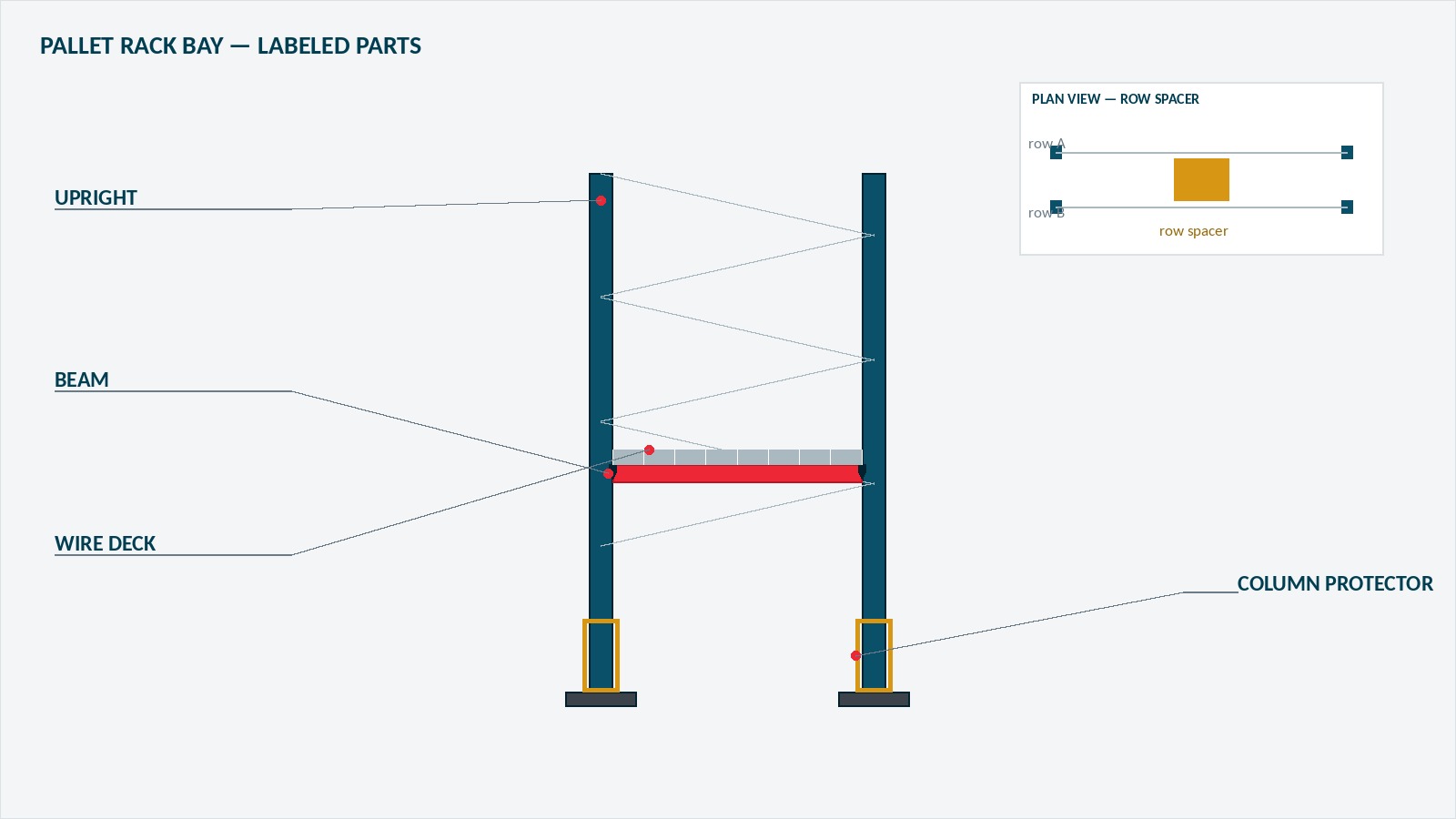
Pallet rack is a structural steel storage system built from a few core components. Understanding the vocabulary makes every other conversation, with a vendor, an inspector, or your own facilities team, go faster.
Every pallet rack purchase is a negotiation between three factors. Rank them 1 to 3 for the project in front of you; most projects get all three, and the order tells us where to start. Your top two set the path, and your third is never off the table.
This article is the short version, the free Pallet Rack Guide covers all of it in depth, no email required.
Download the Guide →Buying used rack without understanding how to evaluate quality is the fastest way to end up with a problem. Rack that came out of a well-run distribution center, disassembled professionally, and stored indoors is a fundamentally different product than rack that sat outside or came from a facility with a history of forklift damage. A reputable dealer knows the difference and prices accordingly, a broker moving someone else's inventory may not.
A beam is a single horizontal component that spans between two uprights. A bay is the complete storage unit, two upright frames plus the beams connecting them, at every level.
It depends on which two points of the Decision Triangle matter most for your project. As a rough project-size guideline: under $2M in racking budget, used is usually viable; $2–5M, a hybrid mix is often optimal; over $5M, new is typically required for volume and configuration reasons.
RMI is the Rack Manufacturers Institute, which publishes ANSI MH16.1, the American national standard for industrial steel storage racks. It's the baseline standard most rack, new or used, is designed and evaluated against.