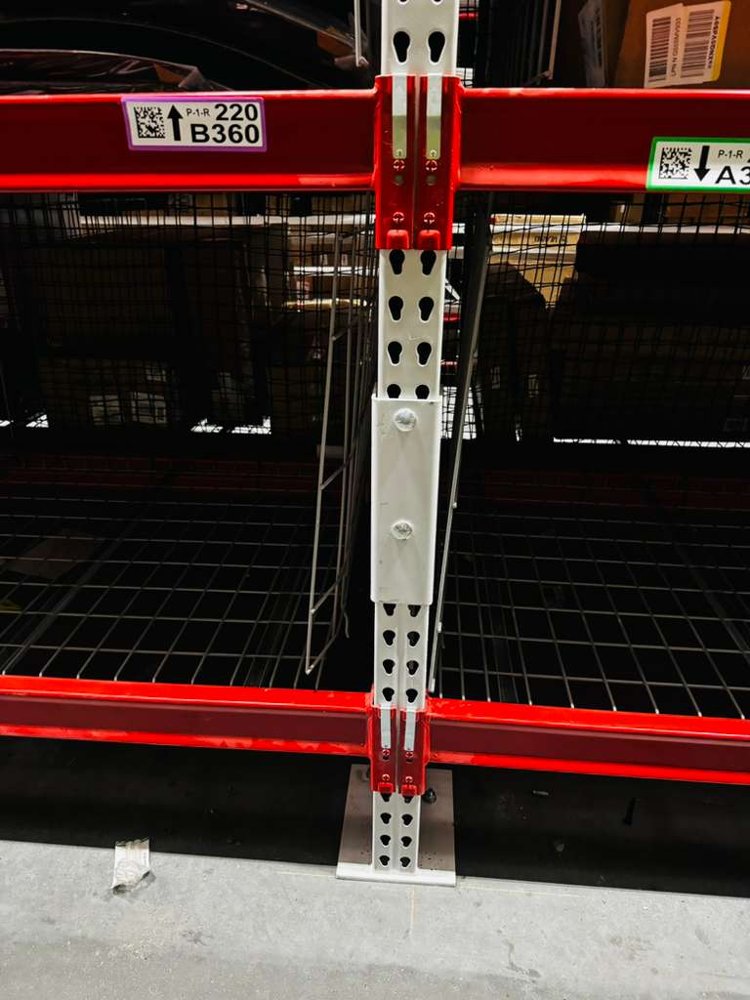
On projects with tight lead times and specific configuration requirements, the hybrid approach often delivers the best outcome: new uprights ordered to spec, used beams and wire deck sourced from inventory. The uprights set the structural envelope; the beams and deck are commodity components where used material performs identically.
The new-vs-used decision isn't binary. Some of the best projects we've built mix the two: new where exact dimensions are critical, used where the configuration is standard and the savings are meaningful.
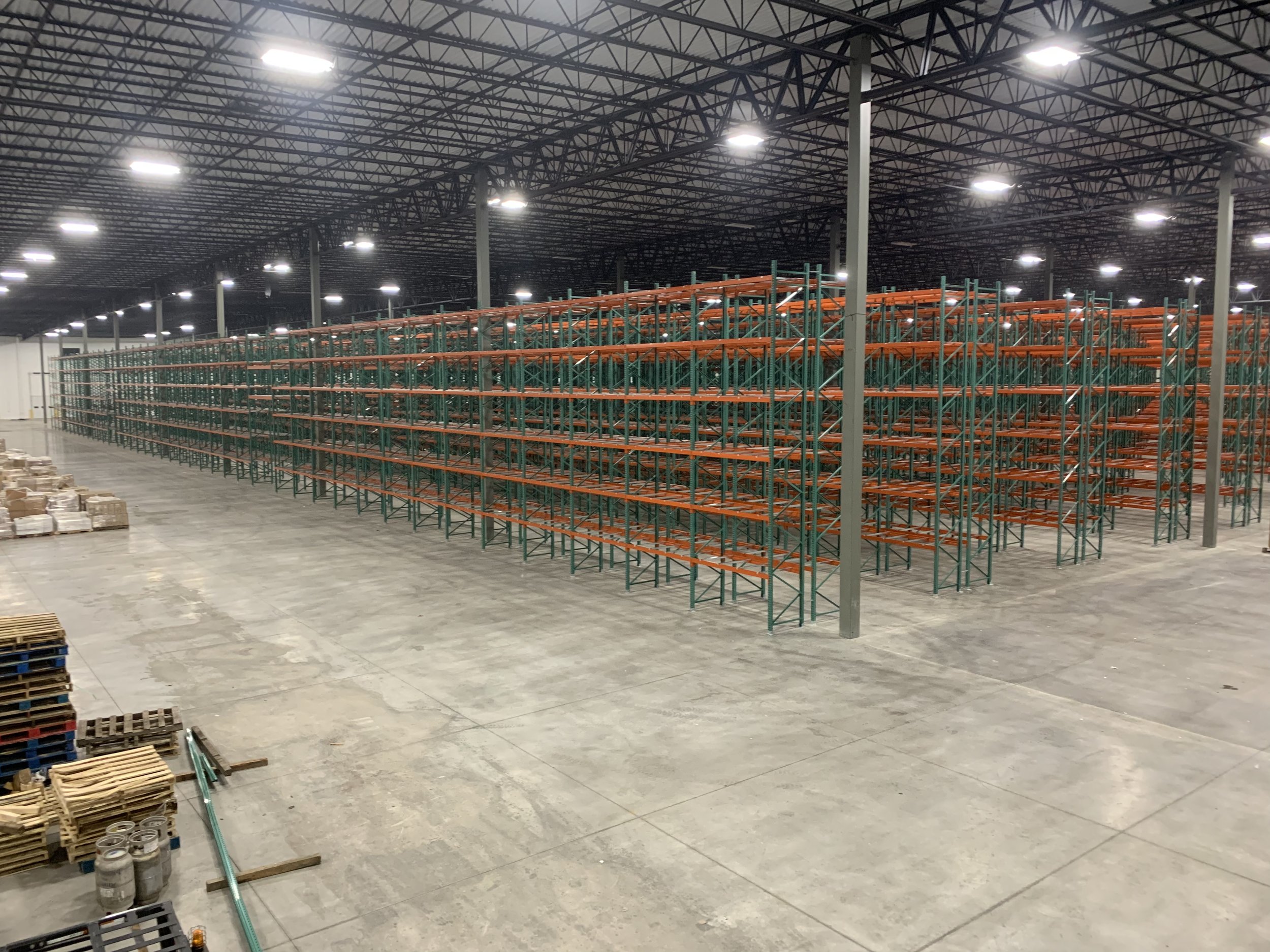
Ceiling height, column spacing, and load requirements get precisely engineered new material where it matters most.
Beams and decking are standardized components where inspected used material performs identically to new, at meaningful savings.
We run both new and used capability under one roof, with manufacturer relationships across every major brand, you don't manage two separate vendors to get there.
From our project-size decision framework: projects between $2 million and $5 million in racking spend are the range where a hybrid approach most often produces the best combination of cost, lead time, and documentation.
Want the full decision framework? Our free Pallet Rack Guide covers it, no email required.
Download the Guide →Major rack profiles from established manufacturers (Interlake, Frazier, Ridg-U-Rak, Unarco, Mecalux, and others) have largely standardized connecting dimensions over time. In many configurations, beams from one manufacturer are compatible with uprights from another. That modularity is what makes a hybrid approach practical: we can match new uprights to your existing used beams, or vice versa, without a full system replacement.
Their team was professional throughout the project and brought forward creative, cost-effective solutions that added real value. They executed each phase on schedule and were highly flexible when we needed to make last-minute adjustments.Brendan Tuohy, VP Distribution & Transportation, Mueller Streamline Co.
No, each component still carries its own documented load ratings and capacity labels regardless of new or used origin. Our first-pass permit approval rate is 98% across all project types, including hybrid builds.
Yes, for the commodity components, beams and wire deck, when the used material has been properly inspected and documented. The load rating depends on configuration (gauge, span, spacing, levels), not on whether the steel is new or used.
If your racking budget falls roughly between $2M and $5M, or you need exact specs on part of the system but standard configuration elsewhere, hybrid is worth a look. See our used vs. new comparison for the full decision framework.